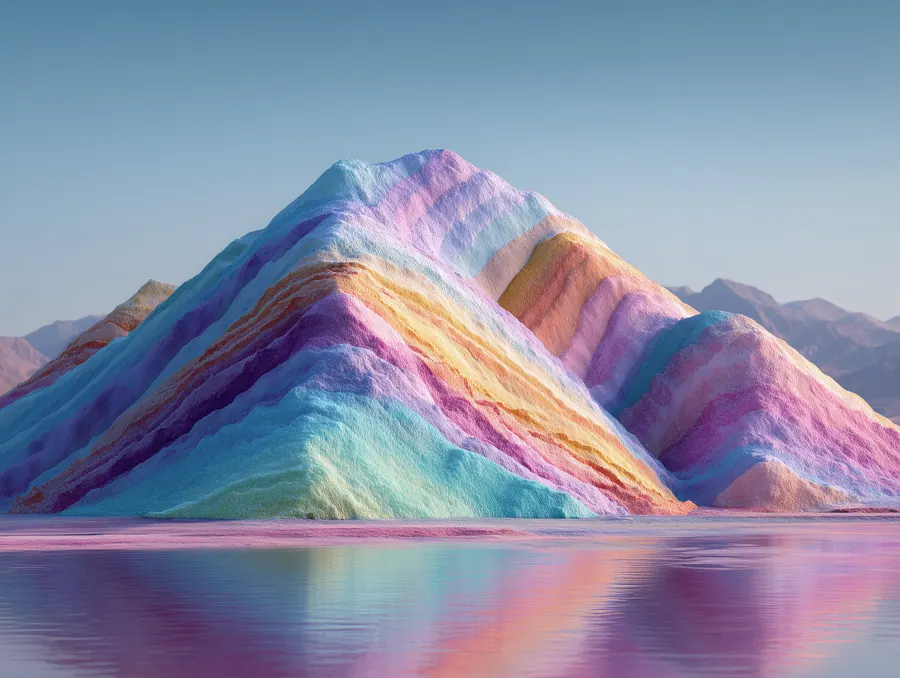
A landscape can be more than a background. It can suggest a story, a mood, and a way of moving through the world. Building a visual world starts with deciding what you want someone to feel when they enter it.
Give the world a few rules.
Choose a limited palette, a quality of light, and a sense of scale. Is everything intimate, or impossibly large? Are surfaces soft, reflective, weathered? A handful of consistent decisions will make an imagined place feel more convincing than a hundred unrelated details.
Write a short description before reaching for a tool. Describe the atmosphere as clearly as the objects. A quiet courtyard at blue hour suggests different choices from an abandoned city beneath a bright pink sky.
Explore, then edit.
Whether you sketch, photograph, model, or experiment with generative tools, keep a record of what changes between versions. Compare them side by side. Choose the one that supports the story rather than the one with the most detail.
A strong world leaves space for someone else’s imagination.
Connect the image to a story.
Ask what happened just before the scene and what might happen next. Even a still image can carry a sense of time. A light left on, an open door, or a trail leading out of view can be enough.
Share the choices behind the image. References, sketches, and earlier versions can help other creators understand your thinking and start their own experiments.
Back to the journal