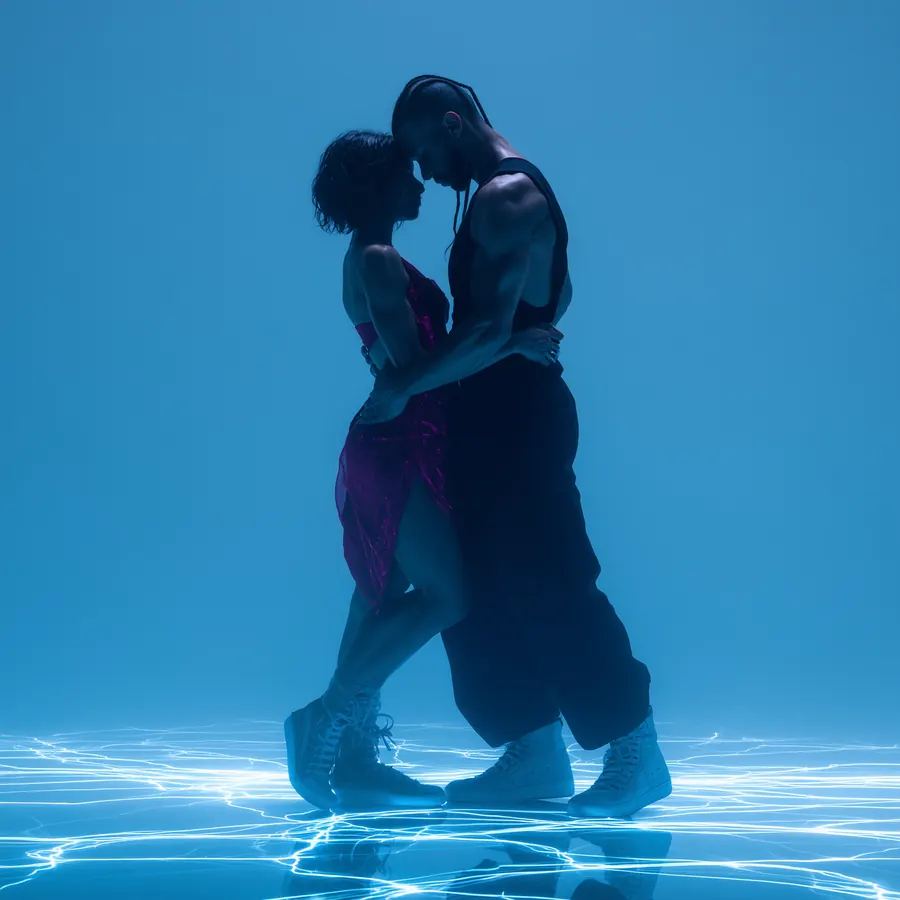
Some ideas are easier to move than to explain. A gesture, a pause, the distance between two people: movement can communicate before a single word is spoken.
Make room for another perspective.
In a collaboration, each person brings a different way of paying attention. One notices rhythm, another notices light, another knows when to stop. The point is not to erase those differences. It is to discover what happens between them.
Begin with a simple shared prompt. Choose a place, a feeling, or a short piece of music. Make something separately, then put the responses next to each other. Where do they connect? Where do they disagree?
Show the process.
A rehearsal can be as compelling as a finished performance. Share a detail that reveals how the work is made: a repeated movement, a conversation about timing, an unexpected mistake. Context gives people a way into the work.
Community grows when people feel invited to contribute.
Keep the invitation open.
Credit the people who helped shape the idea. Ask how they want to be represented. Give collaborators space to tell the story in their own words. A shared project should leave room for more than one voice.
The strongest creative communities are not defined by everyone making the same thing. They are defined by curiosity, generosity, and the willingness to try something together.
Back to the journal